
-

James E posted an update a year ago
On a lighter note, I can’t help but wonder if my opponent here thought I was rice cooking. This game was so good I would almost report myself, LMAO. I feel a little bad because the queen blunder was obviously out of frustration/tilt. https://www.chess.com/game/live/123548404899
chess.com
Chess: crashmondojr vs ruslan1975rus
crashmondojr (1297) vs ruslan1975rus (1353). crashmondojr won by resignation in 20 moves. Click to review the game, move by move.
Nelson2 Comments-

So, in the review of this game, there’s a point where h4 is the best engine move. Same thing happened to @ChessVibes during last night’s stream when he played a rice cooker and in the game I posted that was against a rice cooker. I’m starting to wonder how often h4 is actually an incredible move and we just miss it because we’re human, LMAO.
- View 1 reply
-
-
There’s nothing more vindicating than when chess.com agrees that you played a rice cooker and gives you back your points. I don’t ever report since I’m not some master level ELO and I wouldn’t expect to see many cheaters at my rating, because, they should be winning a lot and all at high ratings, right? But since seeing @ChessVibes run…
chess.com
Chess: zaza09-az vs crashmondojr
zaza09-az (1238) vs crashmondojr (1278). zaza09-az won by resignation in 26 moves. Click to review the game, move by move.
-

It makes me wonder how many cheaters there are out there as I’ve encountered a rice cooker already and I’ve only played a handful of games. In my case I didn’t report the other player, but the next morning I woke to an email from chess.com saying my opponent had been banned for fair play violations and the points I had lost had been restored. …
1- View 1 reply
-
-

Doug G posted an update a year ago
Thanks Nelson for your youtube videos they’re great ! I’m new to the Breaking 1500 course and I’m wondering about How to connect with a monthly coach gathering ? Thanks for your assistance and the opportunity to read the community posts !
Question: How do I recognize the transition from Opening to Middle to End game ? Is that important ?
-

If you are asking about the calls that come with this course, it’s under the Bonus section. Bonus #3. I believe the first call is Tuesday, Oct. 29th. I believe. Hope this helps.
1 -

Thanks Roberto !
1 -

Generally, if the queens are gone you are in the end game.
-

Doug, sounds like you got your questions answered already, but to add about the opening/middlegame/endgame: I don’t think it’s super important. Generally I would say after the pieces are developed and you’ve castled, you’re entering the middlegame. And generally when queens and a few other pieces are traded you’re probably close to the…
-
-

Ronald posted an update a year ago
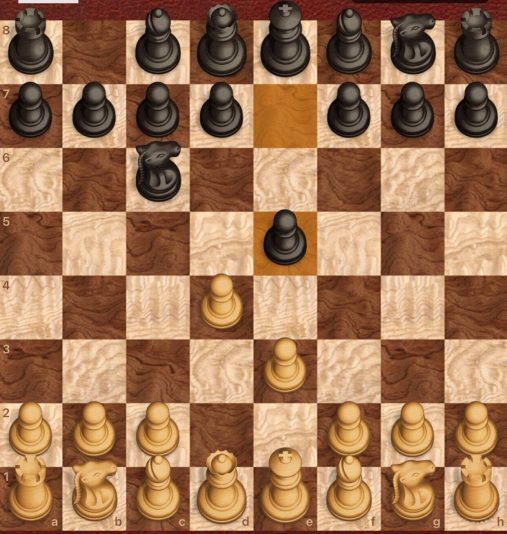
Hello everyone, today I tried playing Stonewall, although I only know the first 4 moves for sure. Of course I messed up the opening. I still won the game. I concentrated on blunder checks and forks in the game. I will follow Mr. Nelson’s advice to learn the Stonewall and play a number of games to see how I get on. For Black I love…

-

The stonewall is a very powerful opening IF you understand it and play it right. Keep going with it and you’ll see how good it can be!
1- View 1 reply
-
-

Roberto posted an update a year ago
Here is my game with the Owen’s Defense. Really enjoyed the position. Ran out of steam around move 25. This was a daily due to scheduling conflicts and was playing a friend from my OTB club.
https://www.chess.com/game/daily/718623831
chess.com
chediak74 (1374) vs rmontanez (1363). rmontanez won by resignation in 54 moves over 2 days. Click to review the game, move by move.
-
Scott L posted an update a year ago
A couple quick questions on the openings.
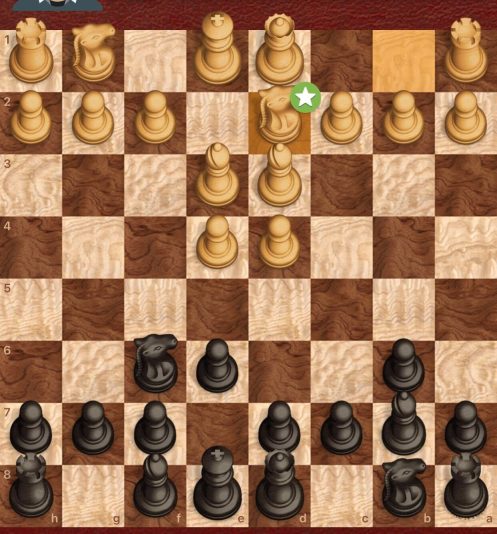
In the Owens (which is super fun), any tips for if white puts their knight on d2 instead of c3? Pinning with the bishop no longer works because the pawn can block.
In the Stonewall, any tips for if black gets crazy and immediately attacks with e5? I ended up pushing both pawns, which was okay, but…
-
For the Owen’s, I would still move my Bishop to d2 to get ready to castle or attack the center with a c5 pawn move.
For Stonewall, I would take the free pawn. It’s a center pawn.
But…I will definitely will be wrong. Just sharing with you what I would do and not to ignore your post. A better player may chime in.
-
Thanks Roberto. Owens reply makes sense. For the stonewall, it’s not a free pawn as the knight would just take back. I could be using the time to develop, and if they want to trade they can… maybe they’re both ok.
-
Good point on the stonewall.
-
Scott, in the Owen’s, if you can’t play Bb4 to pin the knight, then the bishop will usually go to e7 instead. In the stonewall, in that example after Nc6 I supposed you could try f4 right away and then follow up with e3 to prevent e5. But generally speaking if they play e5 you just have to take it with your d pawn and the game goes…
- View 1 reply
-
-
Danny P posted an update a year ago
How do we know which ELO we really are? What i mean by that is we all have different ratings on different game speeds.
I’m a 953 on bullet (havent played that much in a long time)
1130 on Blitz but often lose on timeouts.
1321 on Rapid and prefer this more and more.
1594 on daily because you have so much time to think about moves and play…
-
In my (ignorant) opinion, daily or rapid is closest to actual OTB tournament ratings. Try the 10|5. rapid. It is a decent compromise.
1- View 1 reply
-
I agree with Charles…I use 15|10 rapid for my main elo. I use daily for calculation development and Blitz for opening practice. The ELO of those two do not worry me. This approach helps me not stress much about my rating.
2 -
Danny, if you were to go to OTB (over-the-board) tournaments the time control is usually much longer, so your longest time control rating is probably closest to your actual rating. That being said, if you don’t play much in that time control, it might not be adjusted to what it should be. Hope that helps!
1
-
-
Graham M posted an update a year ago
I maybe wrong, but Lesson 4.7 Discovered attack Tactics advanced at 7.17 minutes isn’t the queen trapped after Rook c1?
-

d4 would be a favourable queen trade for black
2
-
-
Nick R posted an update a year ago
Sounds stupid but I really struggle memorising the chess board grid. So when I see Nf6:Bg4 etc I have to track across and up to find the square. Anyone got any tips on how to memorise the grid so I immediately know which square is being referenced?
-

I have the same problem and wonder if the “Vision” function on chess.com can really improve this problem. So I’ll give it a shot: https://www.chess.com/vision
2 -
The Vision function on chess.com that Julian mentioned is interested, I actually didn’t know that existed. The only thing about that is when I first learned the coordinates it was easier to learn them in relation to the pieces on the board initially. For example, I knew that the e file was where the kings were, and the d file where the…
3- View 1 reply
-
Hercules chess, which was recommended by Nelson in one of his videos, is free. It is not that great but it does have a puzzle/challenge to help memorizing the grid. I do it daily. https://herculeschess.com/ These days virtually all mistakes I make on it are from a mouse slip or from trying to do it when I’m really tired.
-
There is a series of YouTube videos by ChessSimple I believe which are about 1 year old. They are helpful (and short) with daily exercises to get you zeroed in on the board dynamics. One lesson is entitled: Board Visualization Training Program – Month 1
Chessimple
·
Playlist
I just started to play chess (january of 2024). I find… Read more
-
-
Peter K posted an update a year ago
That stonewall opening for white is killer. I mean wow! Some bots who always had my number became toast. Thanks for that tip! The course is already paying off.
-
Awesome, Peter!
-
- Load More